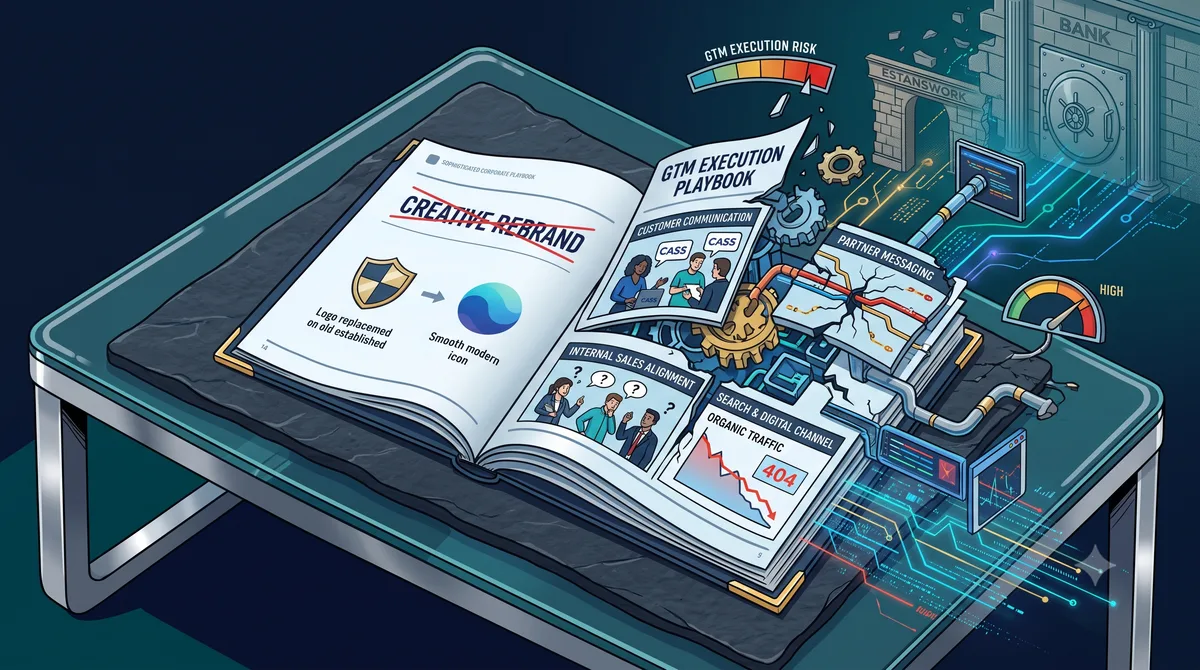
Brand retirement is a GTM event: what payments marketers get wrong when the name changes
In July 2026, Lloyds Banking Group announced it would retire the Halifax brand after 179 years. The coverage treated it as a corporate strategy story: a tidy narrative about simplification, cost efficiency, and portfolio rationalisation. What almost none of that coverage addressed was the operational nightmare sitting directly underneath the announcement. Halifax has roughly 5.5 million active customers, a distinct brand identity in the UK mortgage and retail savings market, and decades of emotional association that Lloyds Bank simply does not carry for those customers. Retiring that brand is not a marketing project. It is a GTM event with measurable downside risk if the execution is wrong.
I have been in payments and fintech long enough to watch a lot of rebrands go badly. Not because the new name was wrong or the logo was unpopular. They go badly because the people running them treat brand transition as a creative and communications problem, when it is a customer retention, partner management, and channel execution problem simultaneously. The Halifax situation is a useful case study precisely because the stakes are visible and the timeline is long enough that other executives can learn from it before Lloyds has to.
The attrition window is real and it opens immediately
The moment a brand retirement is announced publicly, a customer decision window opens. Customers who have low engagement, who are already considering switching, or who feel no particular loyalty to the acquiring brand will treat the announcement as a natural exit point. They do not need a bad product experience to leave. The announcement itself is the trigger.
In retail banking, this dynamic is well documented. The UK's Current Account Switch Service (CASS) data consistently shows switching spikes in the months following visible bank consolidations and rebrand announcements. When TSB was separated from Lloyds in 2013 and then later acquired by Sabadell, each transition moment produced measurable